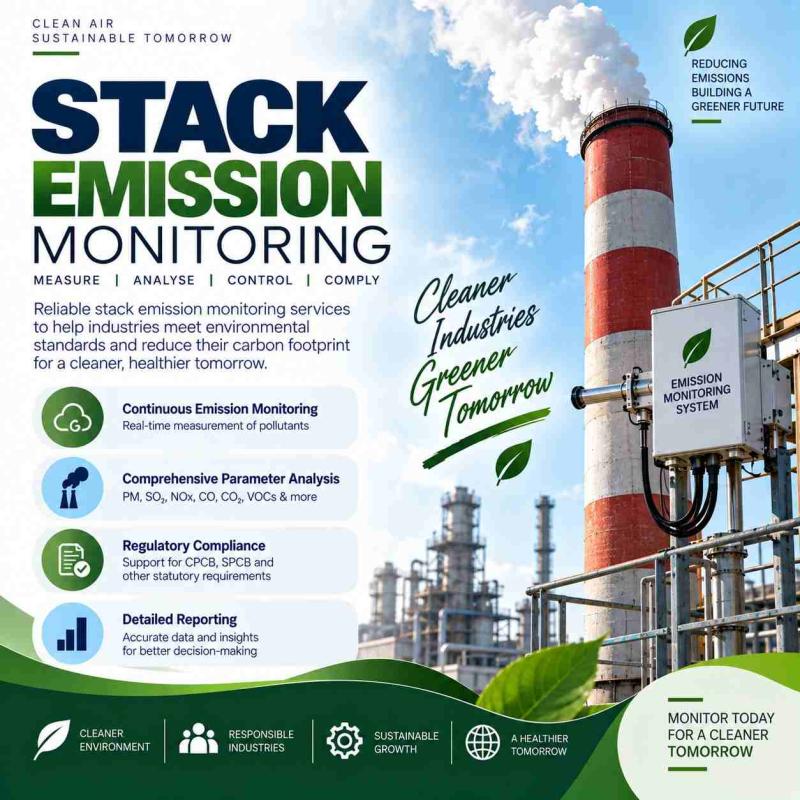
Environ carries out stack emission monitoring at boilers, furnaces, DG sets and other combustion sources in Gujarat, using isokinetic sampling and reporting particulate matter, SO2, NOx and other source-specific parameters against the applicable emission standard.
Stack emission monitoring measures pollutant concentrations directly at the source (the stack or chimney of a boiler, furnace, DG set, or other combustion/process equipment), assessed against the emission standards specified for that source category under the Environment (Protection) Rules (commonly referred to as Schedule VI standards) or category-specific CPCB standards.
Stack emission data is a standard condition attached to Consent to Operate for any unit with combustion or process stacks, submitted at the monitoring frequency the consent specifies, and is also required supporting documentation for CTO applications and renewals.
Particulate matter concentration, and depending on the fuel/process, SO2, NOx, CO, and other parameters specific to the source (for example, specific pollutants relevant to a chemical process stack rather than a fuel-combustion stack; see Process Stack Emission Monitoring). Stack velocity, temperature, and flow are also measured as part of standard isokinetic sampling, needed to calculate mass emission rate alongside concentration.
Stack emission testing follows CPCB's prescribed sampling methodology, sized to the specific stack/source and whatever parameters the applicable standard requires. Environ's laboratory reports results in the format GPCB expects for consent compliance.
Stack emission testing is a standard condition in most Consent to Operate approvals, and the results are used in CTO applications and renewals. Units that look for boiler stack testing or a stack monitoring service are typically on a quarterly or monthly consent schedule, so Environ aligns sampling dates with the compliance calendar. For process vents with chemistry-specific pollutants, see process stack emission monitoring. Repeated exceedances are addressed through air pollution control system design. Results also feed ongoing GPCB compliance. Share your stack details through Send Enquiry for a schedule and quote.
A step-by-step look at how Stack Emission Monitoring is typically carried out.
Confirming sampling ports on each stack meet CPCB's isokinetic sampling requirements.
Collecting stack gas samples using the isokinetic method CPCB protocols require.
Analyzing particulate matter and gaseous pollutants from the collected stack samples.
Comparing results against the Environment (Protection) Rules Schedule VI emission standards.
Delivering a stack-wise emission test report.
Need help?
+91-72029-26676Talk to Environ's team about approvals, NABL-accredited testing, ETP/STP design or ESG reporting, and we'll guide you to the right service.
Call Us Anytime 24/7
+91-72029-26676The same in-house team delivering Stack Emission Monitoring also handles every other environmental service we offer, backed by a NABL-accredited laboratory so testing is never outsourced to a third party. We work as a technical support partner to companies navigating Gujarat Pollution Control Board scrutiny, and our founder is empanelled as a Schedule II Environmental Auditor for the statutory audits certain industry categories must undergo. Our track record in groundwater permissions includes over 100 CGWA licenses secured across 17+ districts in Gujarat and neighbouring regions - because approvals, testing, compliance filing, and treatment plant design-build all sit with one team, findings from one stage inform the next instead of being reconstructed by a different vendor each time.
A quick look at the scale of environmental compliance work Environ India has delivered across Gujarat.

Happy customers

Annual Turnover

Project Completed

Years Of Experience

Experience Staff
Clients working with us on Stack Emission Monitoring and our other environmental services share what it's like working with our engineers, lab team, and consultants.
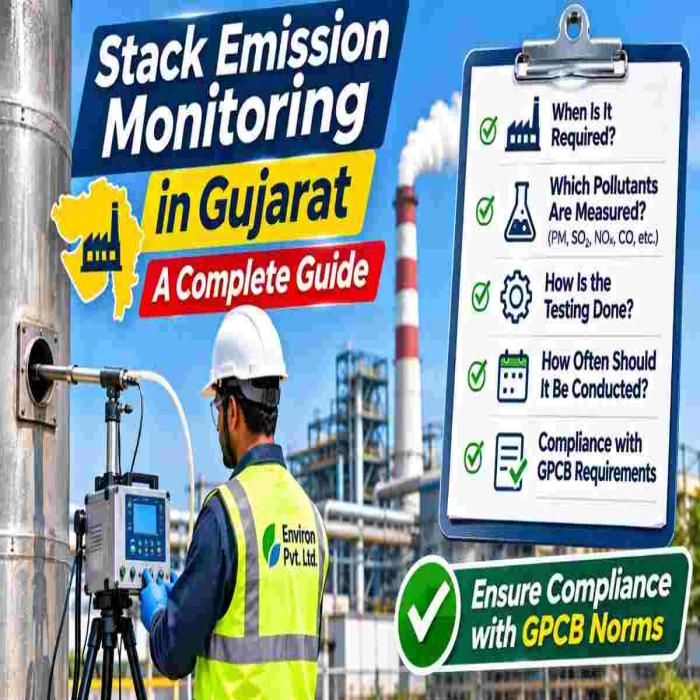
A factory chimney may appear to be operating normally, but the gases released through it can contain pollutants that are...
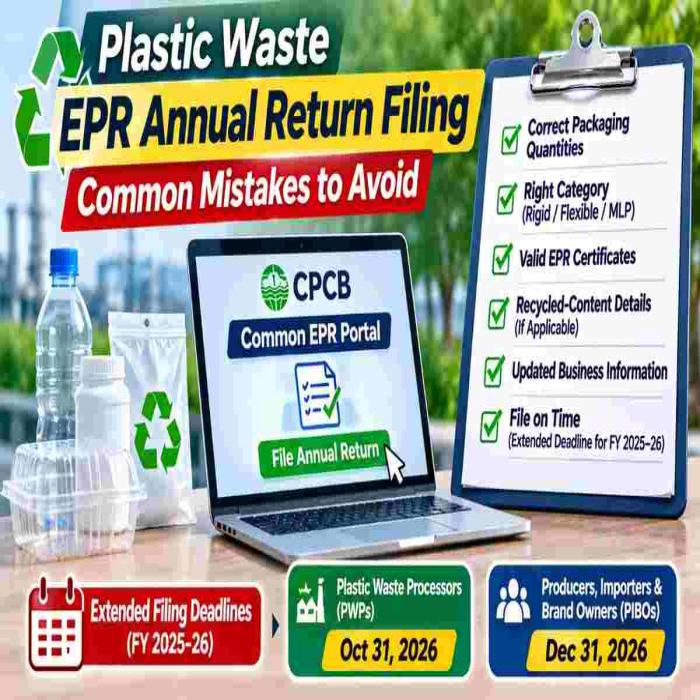
A business may complete its Extended Producer Responsibility (EPR) registration, arrange plastic waste recycling, and pu...

Your Effluent Treatment Plant (ETP) may be running every day, with pumps operating, blowers functioning, and wastewater ...









A look at the environmental engineering and treatment projects we have delivered on the ground.


 >
 >
 >
 >
 >