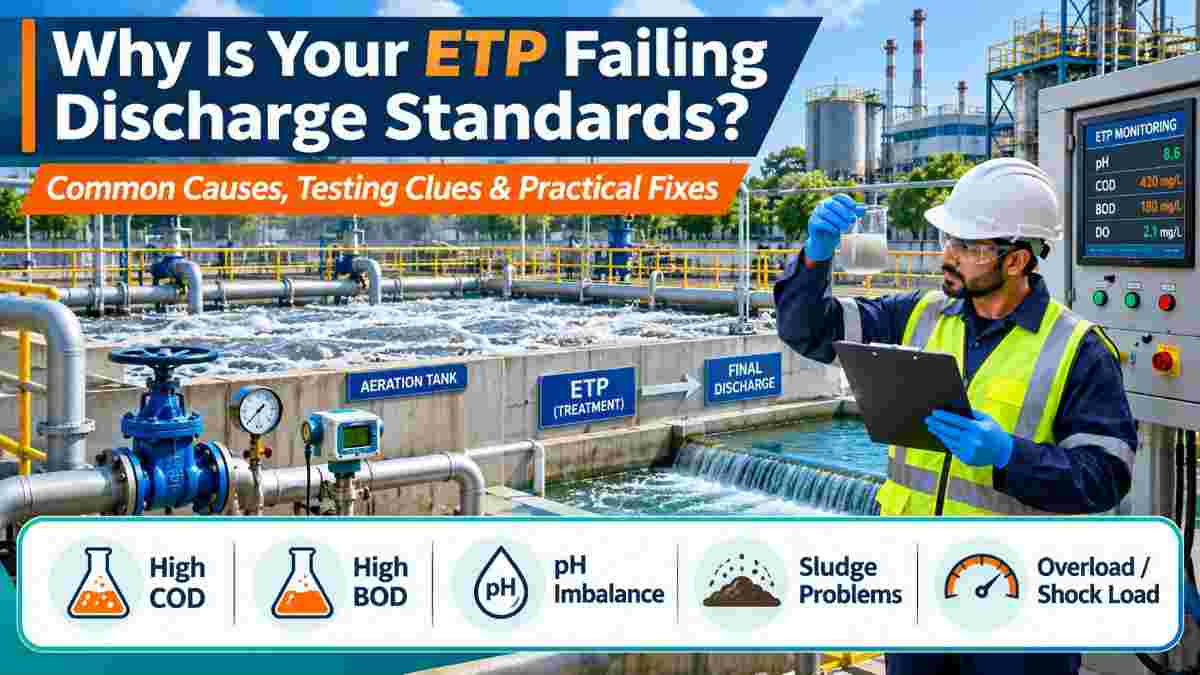
Your Effluent Treatment Plant (ETP) may be running every day, with pumps operating, blowers functioning, and wastewater passing through each treatment stage. Yet the final laboratory report shows that the treated water exceeds permitted limits for Chemical Oxygen Demand (COD), Biochemical Oxygen Demand (BOD), suspended solids, or pH.
For industrial facilities, this is more than an operational inconvenience. Repeated treatment failures can increase operating costs, affect wastewater reuse, and create compliance concerns under Gujarat Pollution Control Board (GPCB) consent conditions.
If your ETP is not meeting discharge standards, the problem may involve fluctuating wastewater characteristics, inadequate aeration, incorrect chemical dosing, poor sludge management, or limitations in the original plant design.
The solution begins with identifying which treatment stage is underperforming rather than adjusting multiple processes without understanding the cause.
This guide explains common ETP problems, how to investigate them, and what industries can do to improve treatment performance.
An ETP fails to meet discharge standards when one or more pollutants in the treated wastewater exceed the limits applicable to the facility.
Industrial wastewater treatment typically involves physical, chemical, and biological processes. Each stage removes specific contaminants before the treated water is discharged, reused, or sent for further treatment.
When one stage does not function correctly, the following stages may receive a higher pollutant load than they were designed to handle.
Common reasons for ETP underperformance include:
Sudden increases in wastewater volume
High influent COD or BOD
Inadequate equalization
Incorrect chemical dosing
Low dissolved oxygen in the aeration tank
Poor biological activity
Excessive sludge accumulation
Clarifier malfunction
Inadequate maintenance
Changes in industrial production processes
The first step is to compare the actual wastewater characteristics with the ETP's original design assumptions.
A plant designed for one production capacity may not perform adequately after manufacturing operations expand or wastewater composition changes.
High COD in treated effluent indicates that a significant amount of chemically oxidizable material remains in the wastewater after treatment.
COD measures the oxygen equivalent needed to chemically oxidize substances in a water sample.
When the outlet COD exceeds the applicable limit, possible causes include increased industrial pollutant loading, insufficient treatment time, poor chemical treatment, or organic compounds that are difficult to biodegrade.
Yes. A sudden increase in influent COD can overload the treatment system.
For example, a manufacturing facility may discharge wastewater with higher organic concentrations after a production change or equipment cleaning cycle.
If the equalization tank cannot adequately balance these variations, the biological treatment stage may experience shock loading.
Operators should investigate:
Changes in production processes
New raw materials or chemicals
Cleaning and washing activities
Unexpected batch discharges
Equalization tank performance
Influent and outlet COD trends
A detailed wastewater analysis can help identify the actual pollutant load entering and leaving the treatment system.
The correct solution depends on the type of organic and inorganic compounds present.
Possible measures include optimizing equalization, correcting chemical treatment, improving biological performance, or evaluating additional treatment technologies.
For wastewater containing poorly biodegradable compounds, a treatability study may be needed to determine which process can achieve the required removal.
Adding more chemicals without testing their effectiveness can increase costs and sludge production without solving the problem.
High BOD in treated wastewater commonly indicates incomplete removal of biodegradable organic matter.
Biological treatment systems rely on microorganisms to break down organic pollutants. Their performance depends on adequate oxygen, appropriate nutrient availability, suitable pH, and stable operating conditions.
When these conditions are disturbed, treatment efficiency can decline.
Yes. Insufficient dissolved oxygen can reduce the activity of aerobic microorganisms responsible for degrading organic matter.
Low oxygen levels may result from:
Underperforming blowers
Blocked air diffusers
Inadequate aeration capacity
Increased organic loading
Poor mixing in the aeration tank
Operators should measure dissolved oxygen at representative locations and compare the readings with the plant's operating targets.
The correct dissolved oxygen range depends on the treatment process and system design.
Biological treatment performance also depends on maintaining an appropriate quantity and condition of active microorganisms.
Mixed Liquor Suspended Solids (MLSS), sludge age, and sludge recycling rates are important operational parameters in activated sludge systems.
If too much biomass is removed, the plant may not retain enough microorganisms for effective treatment.
If excessive sludge accumulates, settling performance and oxygen demand may be affected.
Operators should evaluate MLSS, sludge settling characteristics, return activated sludge, and sludge wasting together rather than relying on a single measurement.
pH affects chemical reactions, biological activity, and the effectiveness of wastewater treatment processes.
Industrial effluent may become excessively acidic or alkaline because of manufacturing chemicals, cleaning agents, or changes in raw materials.
Sudden pH variation can interfere with biological treatment and reduce the effectiveness of coagulation and precipitation processes.
An unsuitable pH can inhibit microbial activity and reduce the removal efficiency of particular pollutants.
For chemical treatment systems, pH also influences the formation and settling of suspended particles and precipitated contaminants.
Operators should check the pH of incoming wastewater, the equalization tank, relevant treatment stages, and the final outlet.
pH control typically requires suitable equalization, monitored dosing, and proper mixing.
Automated dosing systems may improve consistency when correctly designed and calibrated.
However, the required neutralizing chemicals and dosing rates depend on wastewater characteristics.
Chemical adjustments should be based on testing, operator procedures, and engineering review. Uncontrolled acid or alkali addition can create safety hazards and further treatment problems.
Sludge management is an essential part of wastewater treatment.
During treatment, suspended particles and biological solids accumulate and must be separated, handled, and removed according to the system design.
Poor sludge management can result in high total suspended solids (TSS), reduced treatment capacity, and poor final effluent quality.
Sludge carryover occurs when solids escape the settling system and enter the treated wastewater outlet.
Possible reasons include:
Excessive hydraulic loading
Poor sludge settling characteristics
Sludge bulking
Incorrect sludge recycling
High sludge blanket levels
Clarifier equipment problems
Operators should inspect the clarifier, measure sludge blanket levels, review settling test results, and examine solids loading.
Sludge removal should follow a controlled schedule based on actual process conditions.
Important steps include monitoring sludge generation, checking dewatering equipment, preventing excessive accumulation, and maintaining disposal records.
For industries handling regulated waste, the applicable waste classification and disposal requirements must also be followed.
Yes. Chemical dosing directly affects coagulation, flocculation, precipitation, and other treatment processes.
Under-dosing can leave pollutants insufficiently treated, while excessive dosing can create additional sludge, increase chemical consumption, or interfere with downstream processes.
Chemical treatment performance depends on factors such as wastewater pH, pollutant concentration, mixing intensity, and retention time.
Operators should review chemical consumption records alongside influent quality and treated water results.
Jar testing can help evaluate suitable coagulants, flocculants, and dose ranges for wastewater treatment.
However, dosing recommendations must consider the specific wastewater composition and process.
A chemical dose that worked previously may no longer be appropriate after a change in production or influent characteristics.
An overloaded ETP may fail because the actual wastewater volume or pollutant load exceeds its design capacity.
ETP capacity is not determined only by the volume of wastewater treated per day.
Organic loading, hydraulic retention time, pollutant characteristics, solids generation, and equipment capacity also influence performance.
For example, a plant designed to handle a specified daily flow may still become overloaded if the incoming COD concentration increases significantly.
Common warning signs include:
Increasing outlet COD or BOD
Reduced treatment efficiency
Higher sludge generation
Clarifier overflow or solids carryover
Frequent chemical dosing adjustments
Inadequate hydraulic retention time
Repeated equipment overloading
An engineering review can determine whether operational optimization is sufficient or the treatment system requires modification.
Environ provides ETP design and build services based on wastewater characterization, process selection, and treatment capacity requirements.
When a treated effluent sample exceeds the applicable discharge standard, operators should follow a structured troubleshooting process.
Step 1: Confirm the laboratory result.
Check the sampling location, sample collection procedure, preservation, and laboratory report. Repeat sampling where appropriate to verify the result.
Step 2: Review the inlet wastewater characteristics.
Compare current influent COD, BOD, pH, TSS, and flow with historical results.
Step 3: Inspect the equalization system.
Check whether wastewater is adequately mixed and whether sudden changes in flow or pollutant concentration are reaching downstream treatment.
Step 4: Evaluate the biological treatment stage.
Review dissolved oxygen, MLSS, sludge age, pH, and other relevant operating parameters.
Step 5: Inspect chemical treatment and clarification.
Check chemical dosing, mixing, floc formation, sludge settling, and solids carryover.
Step 6: Compare actual performance with design capacity.
Determine whether the treatment plant is receiving more wastewater or a higher pollutant load than it was designed to handle.
Step 7: Implement corrective measures and verify the results.
Make changes under appropriate technical supervision and monitor the treated water quality to confirm whether performance improves.
If the plant is discharging noncompliant wastewater, the facility should implement appropriate containment or approved handling measures and follow applicable GPCB reporting and consent requirements. Untreated or noncompliant wastewater should not be bypassed or discharged without authorization.
A wastewater treatability study helps determine how a particular wastewater responds to different treatment processes.
It is especially valuable when conventional treatment methods are not delivering the required results.
Industries should consider a treatability study when:
Outlet COD remains consistently high.
Wastewater composition changes significantly.
Chemical treatment becomes inefficient.
Biological treatment repeatedly fails.
New manufacturing processes are introduced.
Additional treatment stages are being considered.
An existing ETP requires expansion or redesign.
Treatability studies may include laboratory-scale physical, chemical, or biological testing to evaluate the effectiveness of potential treatment methods.
Environ offers wastewater treatability studies to help identify suitable processes for specific industrial effluent characteristics.
Preventing repeated failures requires consistent monitoring, preventive maintenance, and a clear understanding of wastewater characteristics.
Industries should establish an operating schedule appropriate to the design and complexity of their ETP.
Important practices include:
Monitoring wastewater flow and important quality parameters
Maintaining equalization tank mixing
Checking blower and pump performance
Monitoring biological treatment conditions
Reviewing chemical consumption
Maintaining clarifier and sludge-handling systems
Calibrating monitoring instruments
Documenting equipment maintenance
Conducting periodic laboratory testing
Investigating changes in pollutant loading
Operators should retain records that help identify performance trends before a failure becomes severe.
These practices are consistent with the operational principles described in pollution control guidance for effluent treatment plant maintenance.
High outlet COD may result from excessive pollutant loading, inadequate chemical treatment, poor biological performance, or compounds that are difficult to biodegrade. Influent testing and process evaluation are needed to identify the cause.
Common causes include insufficient aeration, inadequate biological activity, shock loading, poor nutrient balance, and ineffective sludge management. The actual reason should be confirmed through operational measurements and laboratory testing.
Yes. Some plants can be improved through equipment upgrades, process optimization, additional treatment stages, or increased equalization capacity. The feasibility depends on the existing plant design and required treatment performance.
Testing frequency depends on the applicable GPCB consent conditions, regulatory requirements, and operational needs. Facilities may conduct additional internal monitoring to identify treatment problems before compliance samples fail.
The facility should investigate the cause, implement appropriate wastewater containment and corrective measures, and follow any applicable reporting requirements. A wastewater analysis, treatability study, or engineering assessment may be necessary to identify a reliable solution.
Repeated effluent treatment failures can affect production planning, operating expenses, and environmental compliance.
Identifying the actual cause requires more than replacing equipment or increasing chemical consumption. It involves understanding wastewater composition, treatment efficiency, and whether the existing system can handle current industrial loads.
Environ Pvt. Ltd., based in Ahmedabad, Gujarat, provides environmental consultancy, laboratory testing, wastewater treatability studies, and Effluent Treatment Plant design-build services.
Its technical approach brings together wastewater characterization, treatment-process evaluation, engineering design, and performance verification.
For industries experiencing repeated COD, BOD, pH, or suspended solids problems, a structured technical review can help identify appropriate corrective measures.
Is Your ETP Not Meeting Discharge Standards?
Contact Environ Pvt. Ltd. to discuss wastewater testing, treatment performance evaluation, or ETP engineering requirements.
Share your recent inlet and outlet analysis reports, wastewater volume, and existing treatment process details to help the technical team assess the problem and recommend suitable next steps.

A factory chimney may appear to be operating normally, but the gases released through it can contain pollutants that are not visible to the human eye. Boilers, furnaces, diesel generator sets, and industrial manufacturing processes can release particulate matter and gaseous pollutants into the atmosphere.
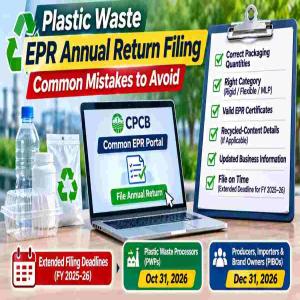
A business may complete its Extended Producer Responsibility (EPR) registration, arrange plastic waste recycling, and purchase the required certificates, yet still face compliance difficulties when filing its annual return.
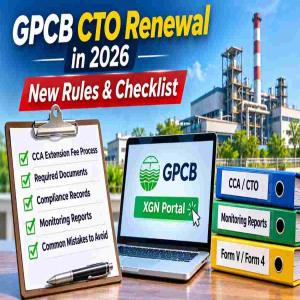
For factory owners and environmental managers in Gujarat, keeping pollution control permissions valid is essential for uninterrupted industrial operations. Missing a compliance deadline, maintaining incomplete monitoring records, or failing to update approval details can create regulatory difficulties.
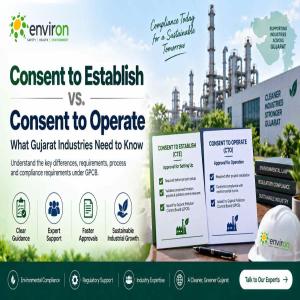
Confused about CTE and CTO from the Gujarat Pollution Control Board? Here is what each approval covers, when you need it, and how the two differ.