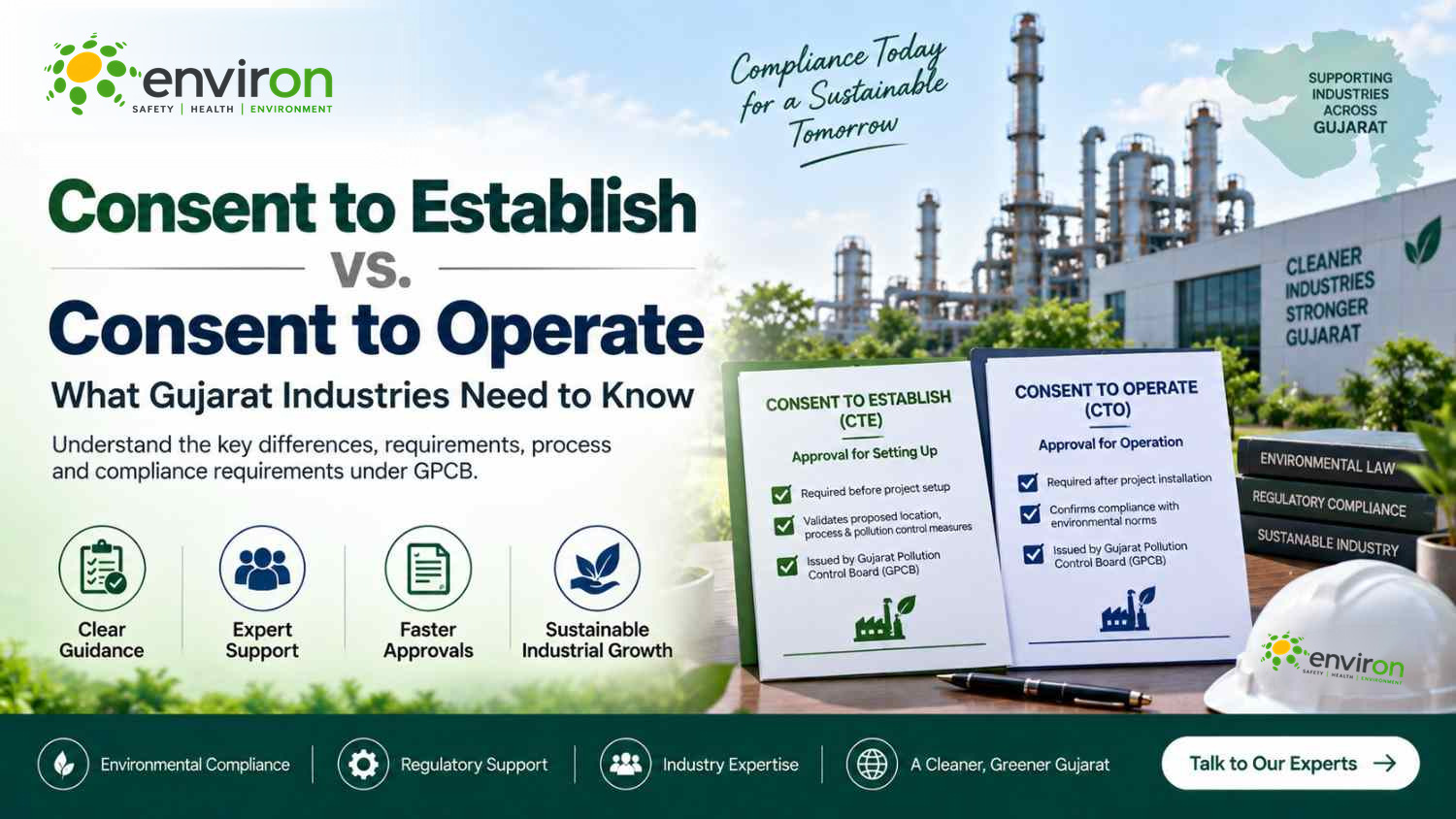
Two of the most common approvals an industrial or commercial unit in Gujarat needs from the Gujarat Pollution Control Board (GPCB) are the Consent to Establish (CTE) and the Consent to Operate (CTO). The names sound similar, and the confusion between them is one of the most frequent questions we hear from clients setting up or expanding a facility — so here is a straightforward explanation of what each one actually covers.
A Consent to Establish is the approval you need before you set up, expand, or make certain changes to an industrial unit. It is essentially GPCB reviewing your proposed project — the manufacturing process, the pollution control measures you plan to put in place, and the effluent, emission, or waste-handling systems you intend to install — and confirming that the project, as designed, is compliant with applicable environmental norms before construction or installation begins.
Think of it as a design-stage clearance: it looks at what you are planning to build, not what you are already running.
A Consent to Operate is the approval you need once the unit is actually built and ready to function. Where the CTE evaluates your plans, the CTO evaluates the completed installation — confirming that what was actually constructed matches what was approved, that the pollution control equipment is in place and working, and that the unit can run within its permitted parameters. Without a valid CTO, a unit is generally not permitted to commence or continue commercial operations.
CTOs are also not a one-time approval — they typically need to be renewed periodically, with the exact validity period depending on the unit’s pollution category and GPCB’s assessment.
Operating without a valid CTO — or having built something materially different from what was approved under the CTE — is a compliance gap regulators take seriously, and can result in directions to stop operations, penalties, or delays to other approvals your unit may need down the line (such as a CGWA groundwater NOC or sector-specific clearances). If your unit is already running and you are not sure whether its approvals are current and complete, that is worth checking before it becomes a bigger problem.
We help industrial and commercial clients across Gujarat prepare and file both CTE and CTO applications, and review the compliance status of units that are already operating. If you have questions about which consent your project needs, our FAQs page covers more common approval questions, or you can get in touch directly with your specific situation.

A factory chimney may appear to be operating normally, but the gases released through it can contain pollutants that are not visible to the human eye. Boilers, furnaces, diesel generator sets, and industrial manufacturing processes can release particulate matter and gaseous pollutants into the atmosphere.
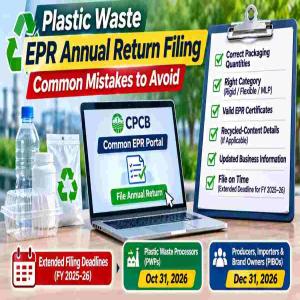
A business may complete its Extended Producer Responsibility (EPR) registration, arrange plastic waste recycling, and purchase the required certificates, yet still face compliance difficulties when filing its annual return.

Your Effluent Treatment Plant (ETP) may be running every day, with pumps operating, blowers functioning, and wastewater passing through each treatment stage.

For factory owners and environmental managers in Gujarat, keeping pollution control permissions valid is essential for uninterrupted industrial operations. Missing a compliance deadline, maintaining incomplete monitoring records, or failing to update approval details can create regulatory difficulties.