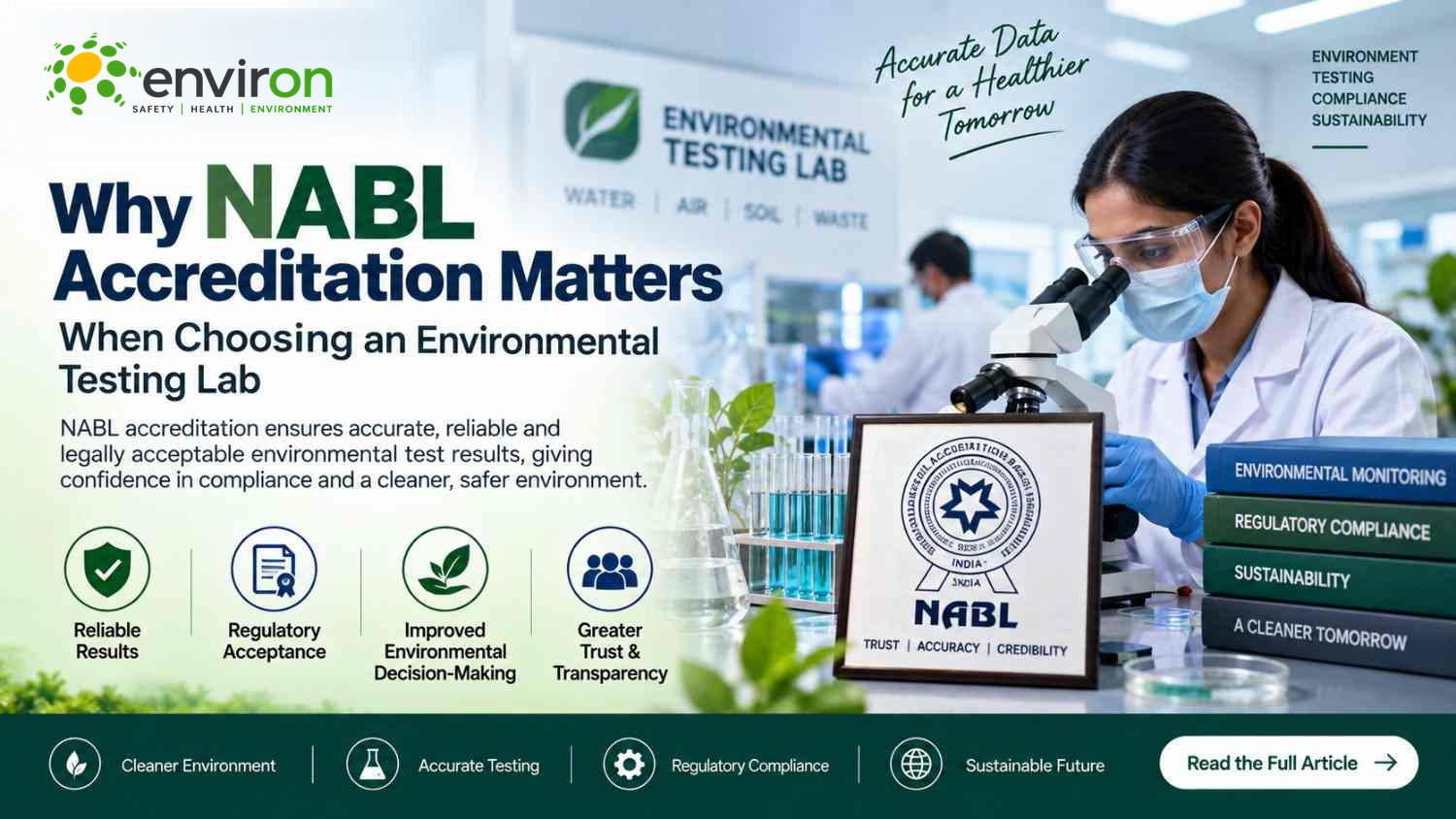
When you are choosing a lab to test your effluent, ambient air, or stack emissions, one detail matters more than most people realize: whether that lab is NABL-accredited. It is easy to treat this as a formality, but the accreditation actually says something specific and important about how reliable a test report is.
NABL stands for the National Accreditation Board for Testing and Calibration Laboratories. A lab that is NABL-accredited has been independently assessed against a recognized international standard (ISO/IEC 17025) covering its technical competence, its equipment calibration, its staff qualifications, and its quality management system. Accreditation is scoped — it specifies exactly which tests and parameters a lab is certified to perform, rather than being a blanket stamp of approval for everything the lab does.
Environmental test reports — water and wastewater quality, ambient air, stack or source emissions — are frequently submitted as evidence of regulatory compliance, whether that is to support a Consent to Operate renewal, respond to a regulator’s query, or demonstrate that a treatment system is performing as designed. A report from a non-accredited lab carries less evidentiary weight, and in some cases may not be accepted at all where an accredited report is specifically required.
Beyond the paperwork, accreditation is also a reasonable proxy for whether you can trust the number on the page. A lab operating under NABL’s framework is required to maintain calibrated equipment, follow validated test methods, and participate in proficiency testing — all of which reduce the chance of a result that is simply wrong.
Our in-house environmental laboratory is NABL-accredited, covering water, wastewater, ambient air, and stack/source emission testing. Because it sits inside the same organization that handles approvals and treatment plant engineering, the same technical team that designs a system is also the one generating the test data behind it. You can see more on how we run the lab on our Quality and Testing Standards page, or check our current accreditations on the Certificates page.
A factory chimney may appear to be operating normally, but the gases released through it can contain pollutants that are not visible to the human eye. Boilers, furnaces, diesel generator sets, and industrial manufacturing processes can release particulate matter and gaseous pollutants into the atmosphere.
A business may complete its Extended Producer Responsibility (EPR) registration, arrange plastic waste recycling, and purchase the required certificates, yet still face compliance difficulties when filing its annual return.
Your Effluent Treatment Plant (ETP) may be running every day, with pumps operating, blowers functioning, and wastewater passing through each treatment stage.

For factory owners and environmental managers in Gujarat, keeping pollution control permissions valid is essential for uninterrupted industrial operations. Missing a compliance deadline, maintaining incomplete monitoring records, or failing to update approval details can create regulatory difficulties.