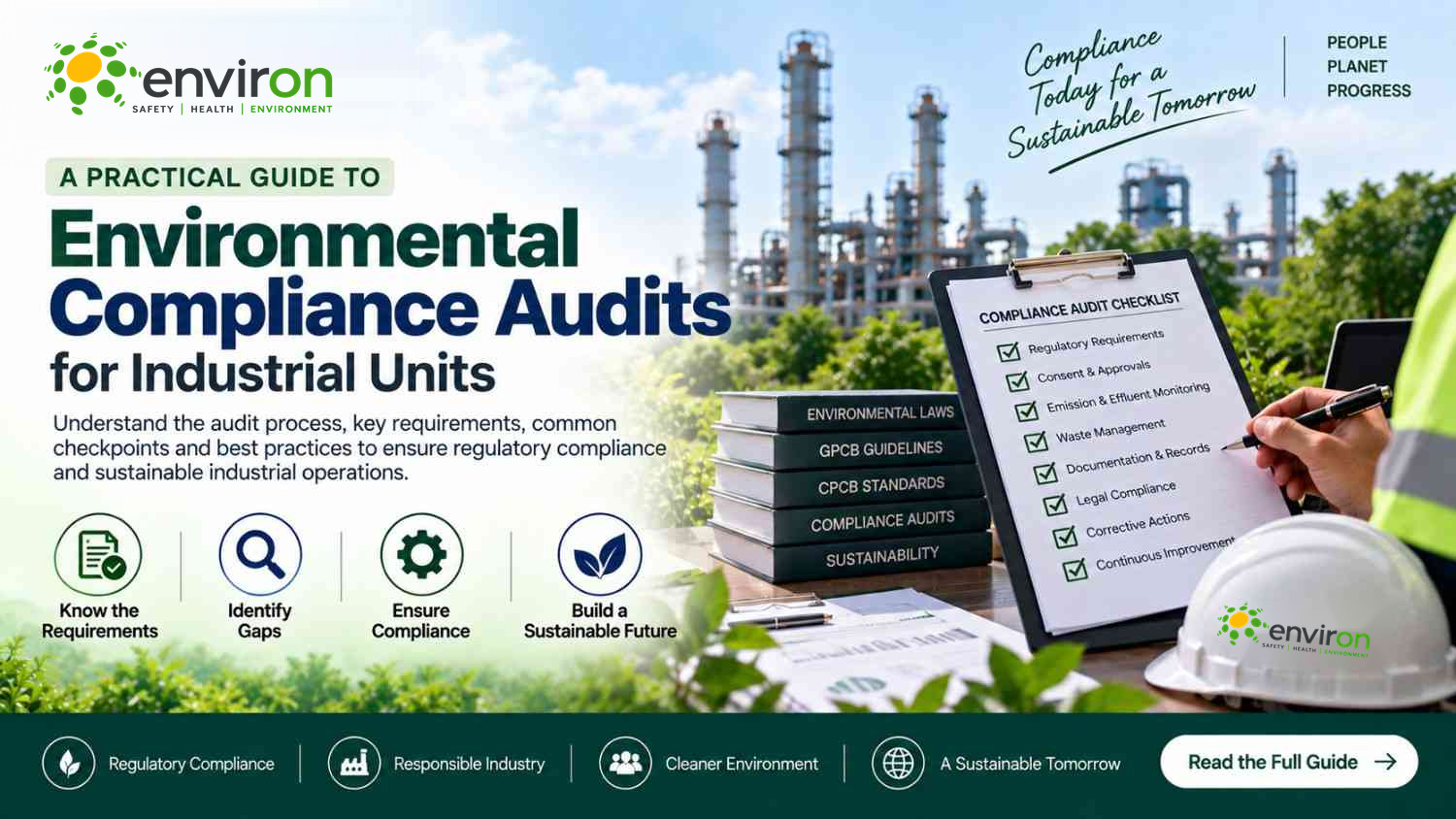
Most industrial units only think about environmental compliance when a renewal deadline is approaching or a regulator raises a query. A periodic environmental compliance audit — done on your own schedule, not the regulator’s — is a more useful way to stay ahead of both problems.
An environmental compliance audit reviews your facility’s current environmental performance and paperwork against what its approvals actually require. In practice, that typically means checking:
Compliance gaps are far easier and cheaper to correct when you find them yourself, on your own timeline, than when a regulator finds them first. An audit that surfaces a gap early gives you room to plan a fix — whether that is a process change, a treatment plant upgrade, or simply catching up on a missed filing — before it becomes a regulatory issue that can affect renewals, expansions, or operations.
An audit is only useful if it leads to a corrective action plan. That typically means prioritizing gaps by risk (a lapsed consent condition is more urgent than an administrative filing delay, for instance), assigning a realistic timeline to each fix, and, where the gap involves testing or infrastructure, using accredited lab data to confirm the fix actually worked rather than just assuming it did.
We carry out environmental compliance audits for industrial and commercial clients, backed by our own NABL-accredited testing and treatment plant engineering capability, so a gap we identify and a fix we recommend come from the same technical team. If a regulator has already flagged an issue at your facility, we can help assess it and plan the corrective action. See our FAQs page for more on how this works, or get in touch to discuss your facility.
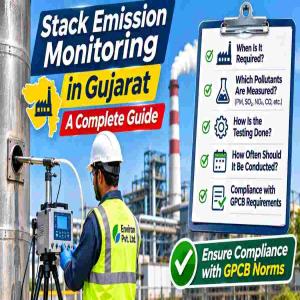
A factory chimney may appear to be operating normally, but the gases released through it can contain pollutants that are not visible to the human eye. Boilers, furnaces, diesel generator sets, and industrial manufacturing processes can release particulate matter and gaseous pollutants into the atmosphere.
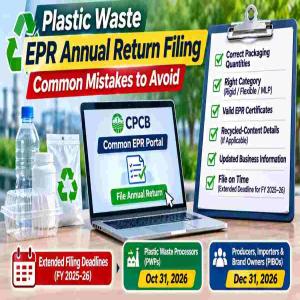
A business may complete its Extended Producer Responsibility (EPR) registration, arrange plastic waste recycling, and purchase the required certificates, yet still face compliance difficulties when filing its annual return.
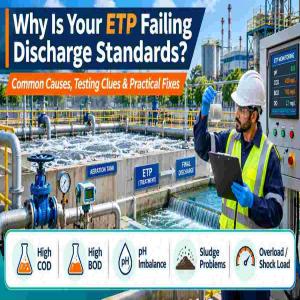
Your Effluent Treatment Plant (ETP) may be running every day, with pumps operating, blowers functioning, and wastewater passing through each treatment stage.
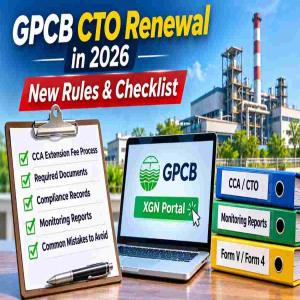
For factory owners and environmental managers in Gujarat, keeping pollution control permissions valid is essential for uninterrupted industrial operations. Missing a compliance deadline, maintaining incomplete monitoring records, or failing to update approval details can create regulatory difficulties.